
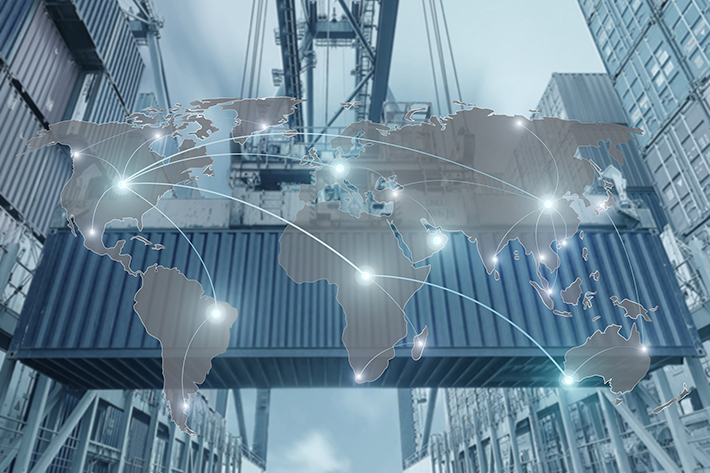
Freight forwarding is an essential part of the production chain since it’s how good it gets from point A to point B. A freight forwarder ensures that goods are moved from the point of production to their next stop, whether it be from where it’s sourced or to the end user. It’s all made possible through well-organized logistics.
Essential to a well-organized and efficient operation is the due to the use and implementation of freight forwarding software.
The use of software in the logistics industry has had a tremendous impact to the global economy and overall wellbeing. First, let’s take a look at the simple beginnings of freight forwarders, who they were and how they operated as well as how freight forwarding functions today.
Freight Forwarding dates back to the 1800s, with one of the earliest examples being the Thomas Meadows and Company Limited. This company was located in London, England, and helped transport items by doing business with several local carriers. With advancements in transport systems, such as reliable trains and steamships in the 1970s, countries started trading with each other and not just within the country.
Origin Of Freight Forwarding
Innkeepers are one of the earliest freight forwarders who were responsible for holding personal items brought by guests and then redirected or transferred them. Throughout the years’ freight forwarding evolved from personal into more business-to-business, which increased trade between countries – especially between Europe and North America.
Today, what was once a small business is one of the most paramount on the planet. Tens of millions of tons of freight valued in the billions is moved across the United States with no signs of tapering. Economists expect by 2040, the value of freight will rise exponentially per ton.
Freight Forwarding an Evolving Industry
For many decades freight forwarders operated like any other business by spending hours dealing with piles of paperwork each day. Customers had to fill out a ton of documents about what they needed when they needed it, what types of services they expected, and much more.
Employees had to spend hours going over the paperwork and then processing it before the transaction could even begin. Not to mention how easy it was to make a mistake that would cause the entire thing to end in disaster.
This was how things were for many years and was just part of doing business. As it did with so many other industries, technology continued to advance and came along and changed things for the better.
Computers and Growth
In the beginning, computers didn’t make the paperwork any easier to process, but they did make keeping a record of it all manageable. Papers housed in filing cabinets were eventually replaced with hard drive storage, and routine operations became software based. This change allowed for small delivery companies to increase and manage a larger workload, becoming more efficient.
However, communication was still one of the primary issues because sharing the documents took a great deal of time meaning less was visible. A process that should have been simple was a setback in the midst of modernizing.
With broadband internet, communication improved dramatically, increasing a business’s reach, and no longer were they restricted to a specific location. As mobile phones made their way into daily work life, people found they could work outside of the office, expanding business and conserving resources.
Introducing Software
The next huge development was freight forwarding software. Freight forwarding software uses the cloud, allowing freight owners to become transportation management system providers. Mobile phones, along with this system, made it easier to have documents on hand wherever you needed them to be there, and you can access them from anywhere in the world.
With these changes, not only could freight forwarding companies do their job better they were able to offer superior services than they were before. This helped the smaller shippers grow because they were able to keep up and deliver a complete view of the process to their customers. Shipment visibility was key to both the shipper and the customer, an aspect not possible before software.
Processes have become simplified, streamlined due to software technology. Connecting with a freight forwarder is common practice and goes off without a hitch. Finding a shipper that meets the needs of your business is at your fingertips because you don’t have to spend time making phone calls and comparing notes from conversations. You can research online, and request quotes in a few keystrokes.
Once the quotes start coming in, shippers can compare them, check reviews and ratings for the forwarders, and more, all from one spot. They can then accept or decline quotes chat with the companies for clarification and share and manage shipping documents online. No more calls, paperwork, or endless email strings are needed.
Overall Software Advantages
As you can see, the freight forwarding business has evolved in significant ways. As technology continues to advance, we expect it to become even easier to navigate and understand. These advancements however, have not changed the core goal of the freight forwarding industry, which is to transport consumer’s products from a starting point to an end point in the easiest way possible.
CSA Software has been developing and implementing an array of freight forwarding software products for more than 35 years. Addressing all aspects of your freight business, our customized cloud-based software will nurture and facilitate growth with efficiency and ease keeping you afloat in today’s global economy. We offer the best product in the industry and continue to advance which means our customers do so as well. Call for your Free Demo today!